

Did you know that the original meaning of the word school is leisure? This is not usually what comes to mind when we hear the word school. But schola, in both its Latin and Greek iterations, means leisure and is the origin for words like school, scholar, and scholarship.
For us moderns, the word leisure brings to mind things like watching TV, consuming entertainment, playing video games, or engaging in other free-time activities. But until recently, schola was something much more. The great 20th century philosopher Josef Pieper lamented that the original meaning of leisure has “become unrecognizable in the world of planned diligence and ‘total labor.’”[1]
So what is that original meaning of leisure? Leisure isn’t the absence of work or the escape from “total labor.” Nor is it the individualistic pursuit of amusements. Rather, leisure is the presence of something meaningful in itself: the activities and practices that further us as human beings and bring us into a deeper experience and contemplation of goodness, beauty, and truth. Leisure, in its historical usage, was not about amusing ourselves but advancing ourselves--in ways that foster a life of faith toward God and love toward neighbor.
When I used to teach high school, on the first day of school I would mention how the word school comes from the word leisure. My students laughed. How could that be? School is a drag; school isn’t leisurely at all; school is a rat race; school is boring; school is lots of work; school is like a job. On they went.
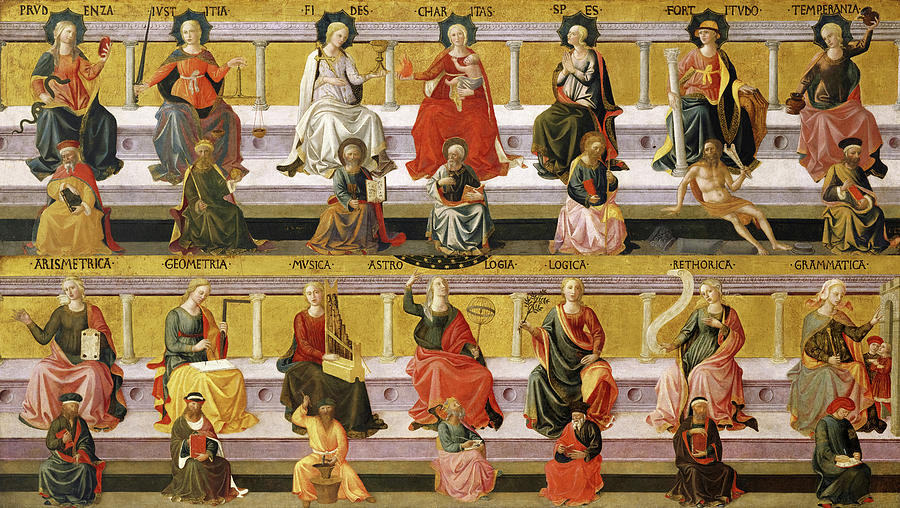
Then I would suggest to my students that part of the problem is that we have such a shallow understanding of leisure time today. In the ancient world, it was those with the privilege of leisure time who could pursue an education in the liberal arts, the arts and skills of a free person (liberalis means free in Latin). Education wasn’t seen as a job or a buzzkill. It was seen as a liberating gateway to a broader world, a freedom from Plato’s shadowy cave, an escape from being ruled by the lower passions. True leisure consists in the contemplation of truth, and the cultivation of the self through meaningful activities that outlast all the less valuable things we do in our “leisure” time today, and that outshine the short-lived visions of getting good grades in school or going to college so that we can make lots of money.
And herein lies the rub with much of our modern predicament in education: we have sold ourselves, our children, and our students short by focusing so much on the utilitarian benefits of education as a means to making more money. I can’t count how many of my students viewed school as a means to an end; there was no desire to learn or grow, but simply to do the thing that led to the next thing. They had to go to high school to get their diploma so they could go to college or get a job, so that they could make a lot of money. And this was the way many teachers sold their classes to students—getting good grades in this class will help you get into college or get a good job. First off, this is a promise that has no guarantees, and frequently doesn’t materialize, which then leaves students jaded. Secondly, it misses the longer-lasting, deeper purposes of education that direct students towards a life well lived, no matter their specific profession. Hicks’s summary is helpful:
When we flatten education into mere transaction and utility towards economic or personal ends, and when we misunderstand leisure simply as what we do for fun when we’re not at work, we stagnate human formation in virtue and stunt human desire for truth, further fragmenting students’ lives towards a rootless, autonomous, and atomized existence.
When our society views just about everything through the lens of efficiency, optimization and quantification, this older conception of rest and leisure and education will be countercultural. But it will be freeing in your home, in how you approach education, in how you approach all of life. You won’t be obsessed with squeezing profits out of every minute of your day. You won’t be consumed with optimizing every aspect of your life with the latest life-hacks. You won’t be worried about whether teaching your children or caring for a loved one is efficient or not; you will do it because it is good and right and beautiful. True rest seems wasteful and inefficient to the world. But that is the whole point: Christ has ushered in a different kind of Kingdom, not based on works, but on mercy, where the love of God in Christ is extravagant, reckless even, as he pours out himself fully for the redemption of the world. In his Kingdom, efficiency, productivity, and the cult of “total work” have been dethroned by faith, hope, and love. And our practices in education should reflect this reality. Not to have “free-time,” but so that we can be truly free to use our time well for the good of neighbor and for the glory of God.
For more on this restful, yet rigorous approach to education see:
Books:
--Joseph Pieper, Leisure: the Basis of Culture
--Christopher Perrin, The Schole Way
--Devin O'Donnell, The Age of Martha: A Call to Contemplative Learning in a Frenzied Culture
--Sarah Mackenzie, Teaching from Rest
[1] Pieper, Leisure the Basis of Culture, 19–20.
[2] Hicks, Norms and Nobility, 22.